
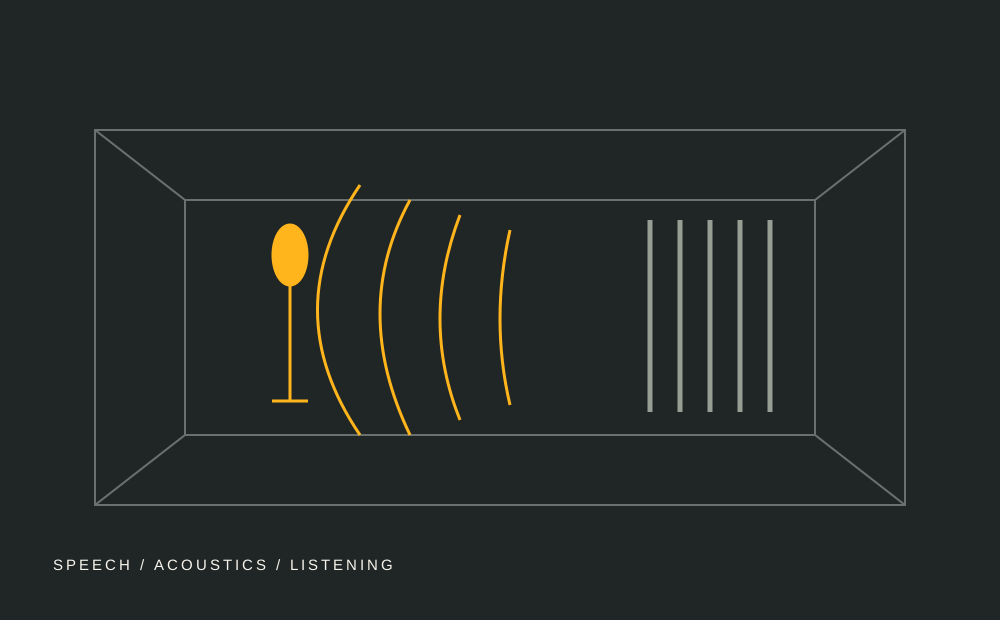
A microphone picks up the sound around it. That includes the person speaking, sound reflected by the room and background noise.
This is why the acoustic environment belongs in the audio planning process. Selecting equipment without looking at the room can leave an important part of the problem untouched.
Consider the sound arriving at the microphone.
Speech reaches a microphone directly from the speaker and indirectly through reflections from the room. Shure’s guidance on critical distance explains that a microphone cannot improve the acoustic environment in which it is placed.
As a practical starting point, look at where participants will speak, where the microphones can be positioned and what other sound sources are present. Ventilation noise and activity outside the room may also need attention.
Agree on seating and participation.
A fixed seating plan provides different conditions from a room where furniture moves frequently. The microphone arrangement needs to account for the places where speech is expected.
There is no universal instruction to put every microphone on the table or on the ceiling. Placement, pickup characteristics, signal processing and room conditions need to be considered together.
Coordinate finishes and the audio system.
Room finishes are part of the acoustic environment. Discuss the room’s design with the architect or acoustic specialist before treating the audio system as an isolated purchase.
Shure’s meeting-room acoustics guidance emphasizes the relationship between the acoustic environment and the audio solution. The useful planning question is how the room and system will work together, rather than which individual component has the longest feature list.
Give the audio planner a useful starting point.
Bring the seating plan, room dimensions, intended use and any known acoustic concerns. If an existing system is difficult to use or speech is unclear, describe the situations in which the problem occurs.
That information supports a focused discussion about audio and acoustic integration. For a wider project brief, see our guide to conference room planning.